


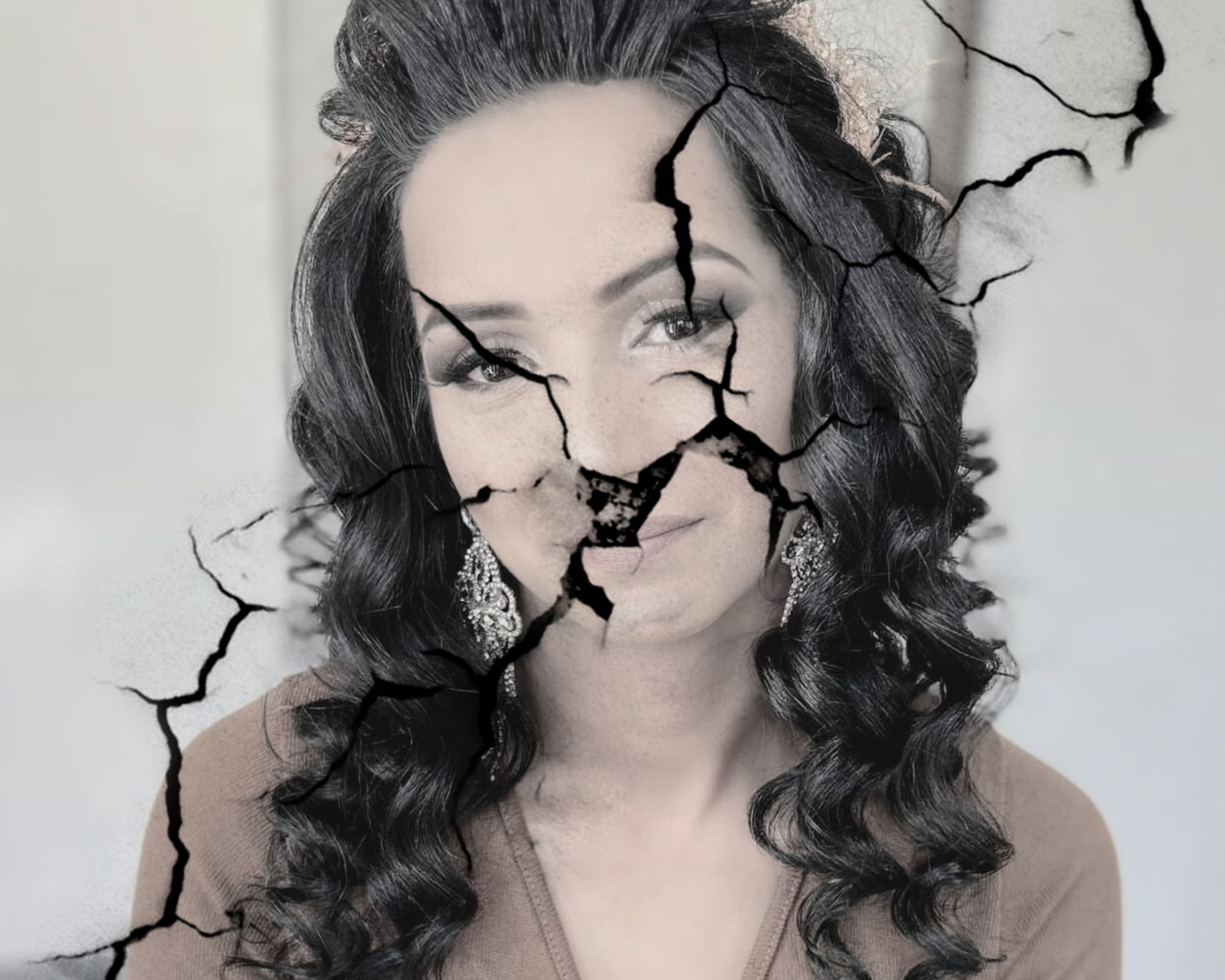
“The Roma are unreliable.”
This stereotype, a rock-solid belief nestled deep in mainstream society’s perception of the Roma, underpins so many other beliefs: That the Roma are “good for nothing”, “lazy”, “unable to build”, to create, to take care of themselves or their children, to “participate in society” or “contribute” in a meaningful way. That there is “no point in helping them when they can’t even help themselves”.
The thing about this stereotype is that it is rooted in actual behavior. From our mainstream lens, according to our understanding of “reliability”, yes: many, many Roma are “unreliable”. And they have one thing in common (other than being Romani). But we’ll get to that in a bit.
They find a job — usually an undocumented construction gig or some other temporary thing. They give their phone number and tell the employer they can reach them there any time. They are ready to start tomorrow, today even. They are eager. Then you call, and the phone is off. It might be back on next week, it might never be on again. They might show up to work, they might not.
When they have a phone again, they will continue using it to hustle. They will respond to job ads, or advertise themselves on social media (even if it’s with “I’m available to donate blood” posts in designated groups). They’ll list their phone number with a “You can reach me here”. When you call, the phone will be off again.
You make plans together. “Let’s have coffee tomorrow”. “I’m coming over for dinner”. Or the plans can be not just to catch up, they might be to do something important. Go through eviction documents, visit the municipality, file urgent paperwork.
They will ask someone for help, set a time to meet, and not show up. Hence the “no point in helping them when they can’t help themselves” narrative.
In the summer of 2021, Martina spent most of her time accompanying people from Pepi’s tribe to municipalities and lawyer offices and helping with paperwork. It was always an unspoken standard that whatever time we agreed on, they’d arrive late. Very often, they wouldn’t show up at all. The only way to reach the person Martina was waiting for was almost never by phone, but by spotting someone else from the tribe in the vicinity and asking around. Sometimes, through word of mouth, the person would be tracked down. Other times, we’d look for ways to reschedule.
Last year, we had a very important online meeting in the evening that both of us had to attend: a meeting with Pixar and other members of the Cultural Board we are part of, to discuss a movie we are consulting on. So we asked Yoanna, one of the younger women in the tribe, to come over with her kids and watch our daughter. She had already done it once a few months prior for a previous Pixar meeting we had. Pepi confirmed and re-confirmed this second babysitting plan with Yoanna’s husband every single day for the two weeks leading up to our meeting. At the time, they worked together in street cleaning and while riding the truck to the depot Pepi would explain how important the meeting was and what it was about, and how we will have food and treats and games prepared for Yoanna and the kids. Yoanna’s husband, who is also Pepi’s nephew, swore up and down that we can count on them, and since Pepi and him are very close, he was proud that he’d able to help out his uncle.
The day of the meeting? You guessed it, nobody showed up.
One hour before the start of the Pixar video call, when Yoanna was supposed to have arrived already, we started our attempts to reach her. The phone she shares with her husband was off. Pepi tried calling the husband’s parents and brother. Phones were off. We had our meeting with our toddler climbing on us and drawing on our faces, but thankfully, everyone else on there took it with humor and kindness.
So, did Yoanna let us down? Did her husband let us down?
The easiest thing, in fact even the most natural thing, would be to think: yes, they did let us down. They didn’t even give us any warning that nobody’s coming. That same day, Pepi and the nephew were at work together, and the nephew said Yoanna and the kids were looking forward to tonight.
It would be easy to stretch out that line of thought further even. Did they lie? Did the nephew lie every day for two weeks when he promised Pepi that we can count on them?
It is very common for people in Romani communities such as Pepi’s to give big promises, make plans, look you in the eye and make you feel that this thing is happening. And then they flicker out. The thing doesn’t happen.
Do they lie? Are they flakey? Chronically unreliable?
What is really going on under the surface
We were not mad at Yoanna. We were greatly inconvenienced, sure, but we knew we were not abandoned and were not lied to. We knew the reason we got stood up had nothing to do with how much Yoanna wanted to help us out or look after our daughter for a bit. We knew the intention was there.
So, what happened?


While we were trying to get hold of Yoanna or her husband, we called several close and distant relatives who were showing as online on Messenger. Pepi would ask them if they’ve seen Yoanna, if they knew whether she left or if she’s still there (in the building they are all living in). Eventually, after our Pixar meeting, one cousin called back and had the nephew’s father with him.
Turns out, Yoanna and her husband ran into a random guy who needed help throwing out furniture and other stuff from his apartment, and he offered them cash to take care of it. This is one of many side-gigs for Roma living in poverty, because it is quick cash (for back-breaking work) but most of all, it means you can keep the things that are being thrown out. Very often, the furniture, or whatever is tossed to the trash — washing machine, fridge, bags of clothes, bags of “useless, old” items — is not damaged at all, or damaged only a little bit. So the Roma keep it, or repair it, or resell it, or deconstruct it and sell it for scrap. For Yoanna and her husband, who live in a small room in a crisis center, share one bed with their two toddlers, and use his parents’ laundry machine, this could have meant a new bed, or a fridge, or new clothes, or anything really.
“You wouldn’t believe what people throw out. They don’t know what they throw out,” Pepi says. “Antiques. Perfectly fine clothes of high-quality materials. Rare books. Jewelry — sometimes, a golden earring slips in. Nobody checks, but the Roma check.”
We asked Yoanna to babysit because she loves our daughter, our daughter loves her, she visits frequently with her kids and they all love playing together.
We needed help for an important meeting. And Yoanna was ready to help. But Yoanna lives in constant survival mode. Her husband lives in constant survival mode. They have two small children. So when an opportunity to make some money and maybe find something valuable came up, of course they took it. When you compare the two situations, which one was more important? More urgent?
They weren’t able to return to the crisis center in time to send any warning to us. Their phone was pawned earlier that day because they had no money for food.
Which is why many Roma have a phone one day and no phone the next. The phone is a disposable thing, very useful of course, but not more useful than food on the table. When they need cash, the phone is the first thing they pawn. Later, when they get cash through any one of the many ways they hustle, they take the phone out. And soon, they pawn it again. Often the SIM card inside gets lost and since it’s usually a pre-paid voucher, they just get a new one next time they have cash. So phone numbers change all the time.
Out of the countless examples we could have given, we used our story with the Pixar meeting to illustrate an urgent situation that most people in mainstream society could empathize with, because it’s closer to their reality. (And by “empathize”, we mean empathize with us.)
But try to picture it this way: We had an emergency, a blip in an otherwise stable existence, that ultimately proved to be nothing more than an inconvenience and had no negative consequences.
Yoanna and her husband live in a constant state of emergency. The person they ran into gave them a temporary reprieve from their emergency by opening the door to some cash and material items.
Regardless of whether Yoanna showed up that day or not, our daughter would still be fed, warm, safe, and so would we. That’s the norm for us and our daughter.
For Yoanna and her family, no single day is a guaranteed like this. Every day, they have to hustle to secure the basics.
So the desire, the intention: it was there. The promises were real. There were no lies. But one family needed two hours for a Zoom call, and the other family had just pawned their one phone to feed their children.
It’s two different realities. Two different galaxies.
Here, the question about “reliability” goes right out the window. Because while Yoanna was not “reliable”, in the conventional sense, for us, she was reliable in showing up to secure basic survival for her family.
The wobble of poverty
In August 2021, Martina visited the home base of ATD Fourth World, a movement that works with people and communities in poverty. It was in a beautiful village in Northern France, where Van Gogh had painted his heart out many years prior. It was through the ATD team in Bulgaria that Martina met Pepi’s Romani tribe to begin with.
There were many paintings, sculptures, books, pieces of art that depicted the realities of poverty. But one really stuck for Martina. By this point, she had experienced so many missed meetings and phones that go dead, that it felt both true and cathartic to see this reality depicted outside of the Romani context. It was exactly where it belonged. In the poverty context.
The sign under the sculpture says, in French:
Sculpture created by Florent Bambara, a volunteer in Burkina Faso, based on the testimony of a man living in extreme poverty who shared what his greatest suffering was:
“I think… poverty makes it so I no longer have strength. I argue constantly with my own thoughts.”
The rough stone left at the top of the sculpture represents the weight of thoughts, which are heavy to carry when you cannot share them with anyone.
The damaged eye represents the fact that others perceive him as one-eyed, as handicapped.
The nose represents life. This sculpture has only one nostril, symbolizing that in poverty life is not complete — you survive, but you do not truly live.
It has only one lip, which means that in poverty you cannot speak, you have no voice.
This sculpture is mounted on a metal rod, so that when you barely touch it, it trembles. This illustrates the fact that, in poverty, a person cannot be stable.
This is how it feels. “When you barely touch it, it trembles.” And, “in poverty, a person cannot be stable”. Even if they want to be, even if they try to be, with their whole heart.
But we would add, there is a hidden strength and a hidden stability in this outer wobble.
Every time a person in poverty misses a call, an appointment, a promise, it is because they had to show up somewhere else. Somewhere more urgent. Isn’t this strength? Isn’t this the most radical kind of stability?
The Roma living in poverty flicker in and out of view—for us. Outsiders who live stable lives. When you walk through the curtain of poverty, you see them in full view. And they are not in collapse. They never stop showing up.
This is the third and final part of our series “Poverty Culture: Poverty behaviors misread as Romani character”.
Part 1 and 2 are here:


Next week, we will publish a translated Romani song.
If enjoyed the poverty culture theme, you can read more of our previous articles that touch explore it here:


And here, you can find our book When the truth does not sound true: Exploring common anti-Roma stereotypes.
Our paid subscribers can download it for free as a PDF below.
